


Donald Trump is heading into lame duck territory.
The media keeps repeating it.
Democratic strategists keep believing it.
Consultants keep whispering it into donor circles like a bedtime story meant to calm anxious investors.
But Kentucky and Texas just sent a different signal across the political radar.
MAGA is still alive.
Still disciplined.
Still emotionally unified.
And perhaps most importantly, still centered around one man.
That matters more than Democrats seem willing to admit.
The victories this week by Trump-backed candidates in Kentucky and Texas were not just ordinary primary wins. They were demonstrations of gravitational force. In a political era where attention spans are collapsing and party loyalty is eroding, Donald Trump still possesses the rarest asset in modern politics:
A movement that knows exactly what it is.
Democrats, meanwhile, continue operating like a coalition searching for a mission statement.
That is the real danger facing the party heading into 2026.
Not Trump himself.
Not even Republican policy.
But the growing contrast between a Republican Party emotionally organized around a singular identity… and a Democratic Party that still sounds like twelve focus groups fighting over a Google document.
That difference is everything in modern politics.
Movements beat management.
Emotion beats administration.
Simple beats fragmented.
And right now Republicans have the simpler emotional architecture.
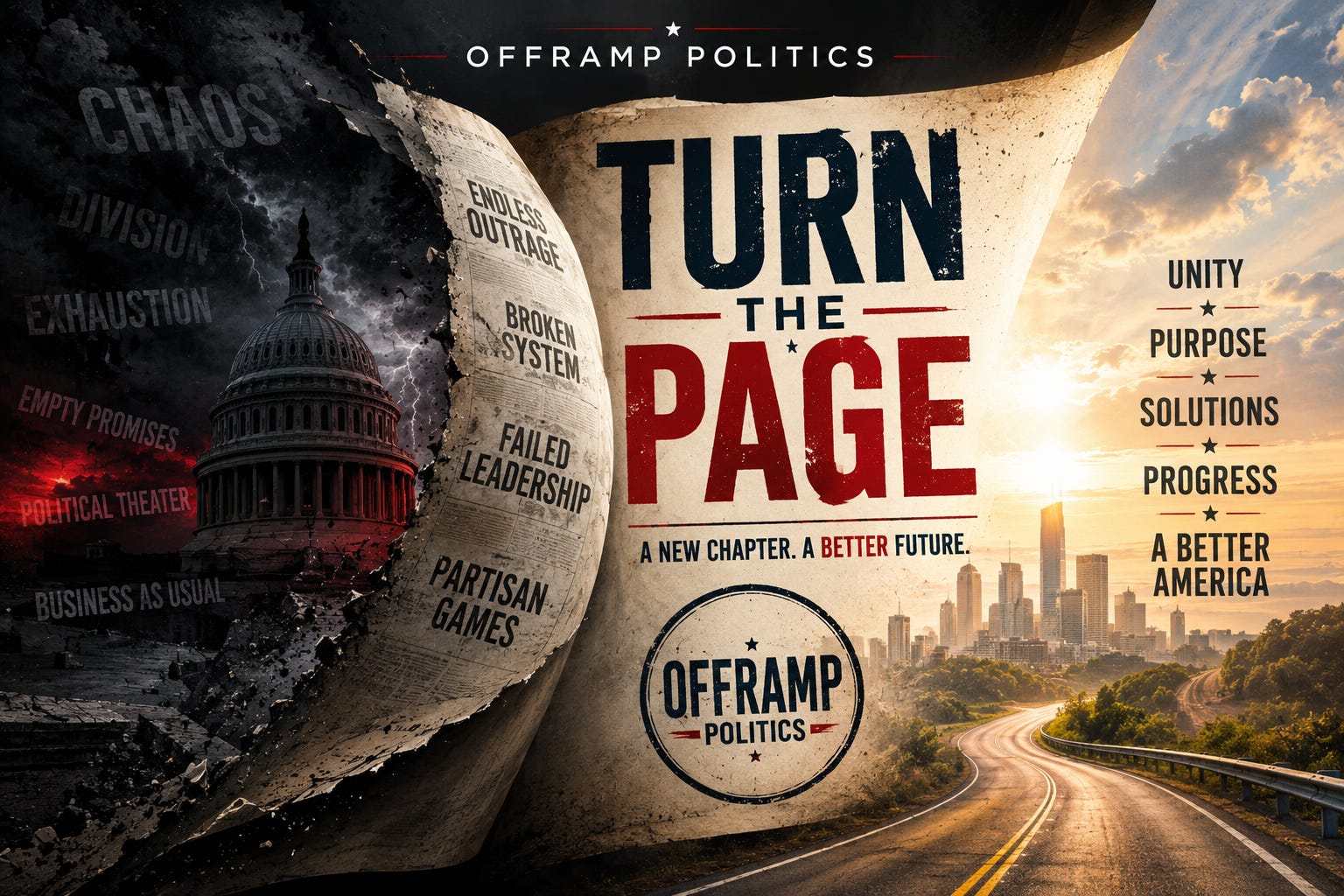
The Democratic Party desperately needs a “Turn The Page” election.
Not just as a slogan.
As a framework.
Because what voters appear to be searching for is not another white paper, another coalition chart, or another carefully calibrated message designed to offend nobody.
They want release.
Release from exhaustion.
Release from chaos.
Release from the permanent psychological fatigue that has consumed American politics for nearly a decade.
Ironically, Democrats may be overcomplicating this moment precisely because they are trying to solve every problem at once.
The most successful Democratic victories of the modern era were emotionally simple.
Bill Clinton:
“It’s the economy, stupid.”
Barack Obama:
“Hope and Change.”
Joe Biden:
“Return to normalcy.”
Simple.
Clear.
Transferable.
The message fit on signs.
It fit in conversations.
It fit emotionally into the lives of ordinary people.
That is what Democrats are currently missing.
Meanwhile, Republicans are still running on a message that requires almost no explanation at all:
Trump.
That is the message.
Whether political observers like it or not, Trump has become something larger than a traditional political figure inside the Republican ecosystem. He represents rebellion, revenge, disruption, nostalgia, strength, identity, and cultural resistance all wrapped into one political symbol.
That kind of emotional consolidation is extremely difficult to compete against with fragmented messaging.
Especially during a period of economic stress, geopolitical instability, and technological anxiety.
The Democratic Party now faces a dangerous possibility:
That voters may begin viewing Republicans as the “action” party and Democrats as the “discussion” party.
That perception alone could structurally alter the 2026 environment before most campaigns even begin.
And this is where “Turn The Page” could become powerful.
Because unlike many Democratic slogans, it contains emotional flexibility.
Older voters can interpret it as exhaustion with political chaos.
Younger voters can interpret it as generational transition.
Moderates can interpret it as stability.
Progressives can interpret it as transformation.
Even disillusioned Republicans can emotionally connect to it without feeling ideologically cornered.
That matters.
Because modern elections are no longer simply contests of policy.
They are contests of emotional navigation.
People are no longer voting only for outcomes.
They are voting for atmospheres.
For emotional weather systems.
For the feeling of where the country is heading.
Right now MAGA still has emotional clarity.
Democrats still have policy complexity.
And unless that changes quickly, Republicans may enter 2026 with the one advantage that matters most in modern political warfare:
A unified story.
The party that controls the story increasingly controls the momentum.
And momentum, once created, becomes incredibly difficult to stop.